

The sanctification of nature and people
This section presents the importance of water for Christianity and for the sanctification of nature and people. Furthermore, it presents the particular manifestations of folk culture that are related to the procession of the icon of Panagia Skiadeni by the residents of Rhodes and Chalki.
- The Great Sanctification
- The Sanctification Service of Saint Tryphon
- The Easter procession of Virgin Mary “Panagia Skiadeni”
- The “patikiasma”
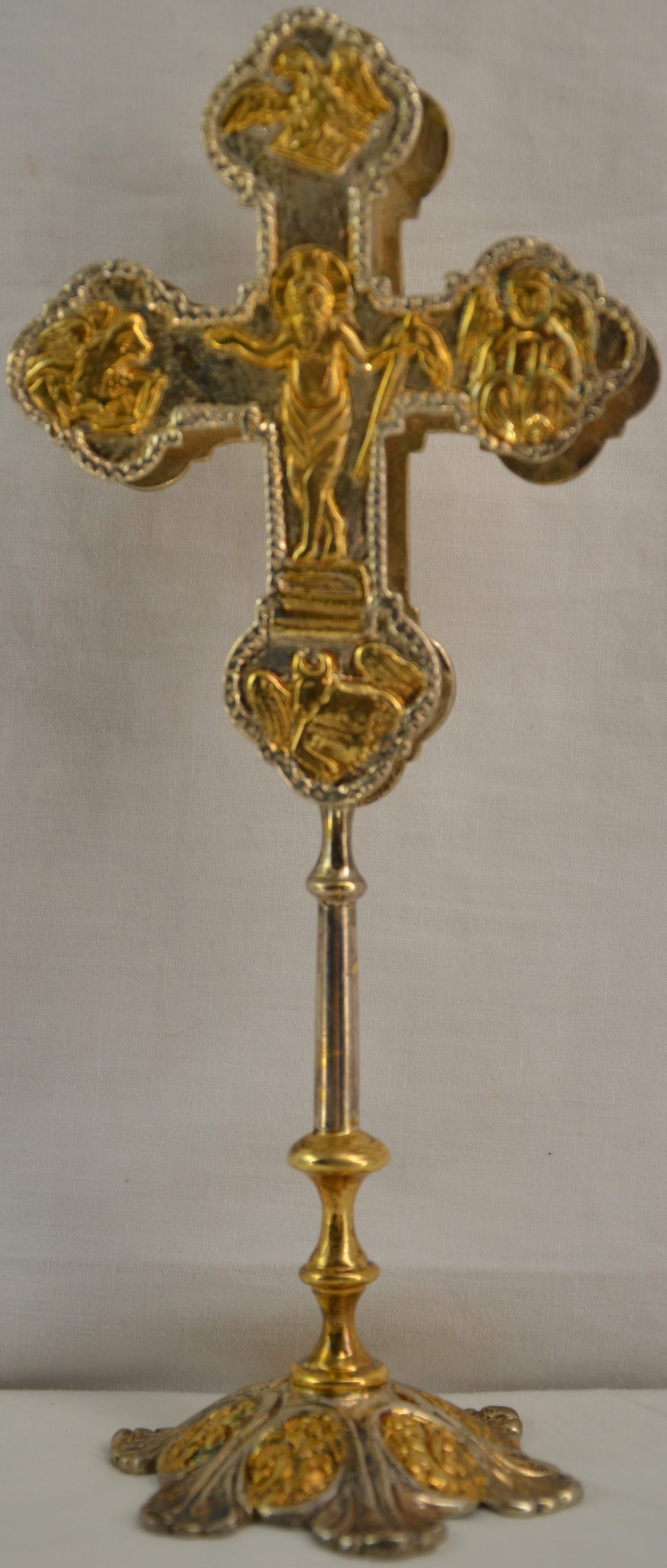
The first subsection deals with the service of the Great Sanctification, which is celebrated on the eve and on the day of the feast of Epiphany (January 6), in memory of the Baptism of Christ in the Jordan River. The Great Sanctification is directly connected to the mystery of repentance and confession, as its beginning goes back to the baptism of repentance of Saint John the Baptist. During the ceremony of Epiphany, the priest sanctifies the water with prayers, an invocation of the Holy Spirit and a triple immersion of the Holy Cross in the water.
On the eve and on the day of Epiphany, the priest, usually accompanied by a young child who carried the holy water in a copper vessel, the "sigli", would sprinkle holy water on all the houses and shops in his parish. In southern Rhodes, the faithful sprinkled their fields and domestic animals with holy water they had received from the church, as agricultural production was crucial to their very survival.
Η δεύτερη υποενότητα είναι αφιερωμένη στον αγιασμό του Αγίου Τρυφώνου. Ο Άγιος Τρύφωνας στην ορθόδοξη λατρεία έχει καθιερωθεί ως προστάτης των χωραφιών και των αμπελιών. The second subsection is dedicated to the sanctification service of Saint Tryphon. In Orthodox worship, Saint Tryphon has been established as the protector of fields and vineyards. In his post-Byzantine depictions, the saint is depicted holding pruning shears. On his feast day, February 1, a sanctification service is held. The faithful bring to the church products they cultivate, which are then shared with everyone in the congregation as a blessing.
The saints carry the holy water from the sanctification of Saint Tryphon to their fields and crops, so that they enjoy the protection of the saint and their produce is not affected by diseases or adverse weather conditions. The very survival of people in the past was directly dependent on crops, so they placed their hopes for good crops in the saint - the protector of fields and vineyards.
The third subsection is about Panagia Skiadeni and the procession of the icon during Easter time: The miraculous icon of Panagia Skiadeni tours the villages of southern Rhodes and is carried in procession from house to house throughout Holy Week and Easter Week (the Diakainisimos week). The procession of Virgin Mary also includes Chalki, whose residents have developed a special relationship with Panagia Skiadeni, whom they consider their patroness.
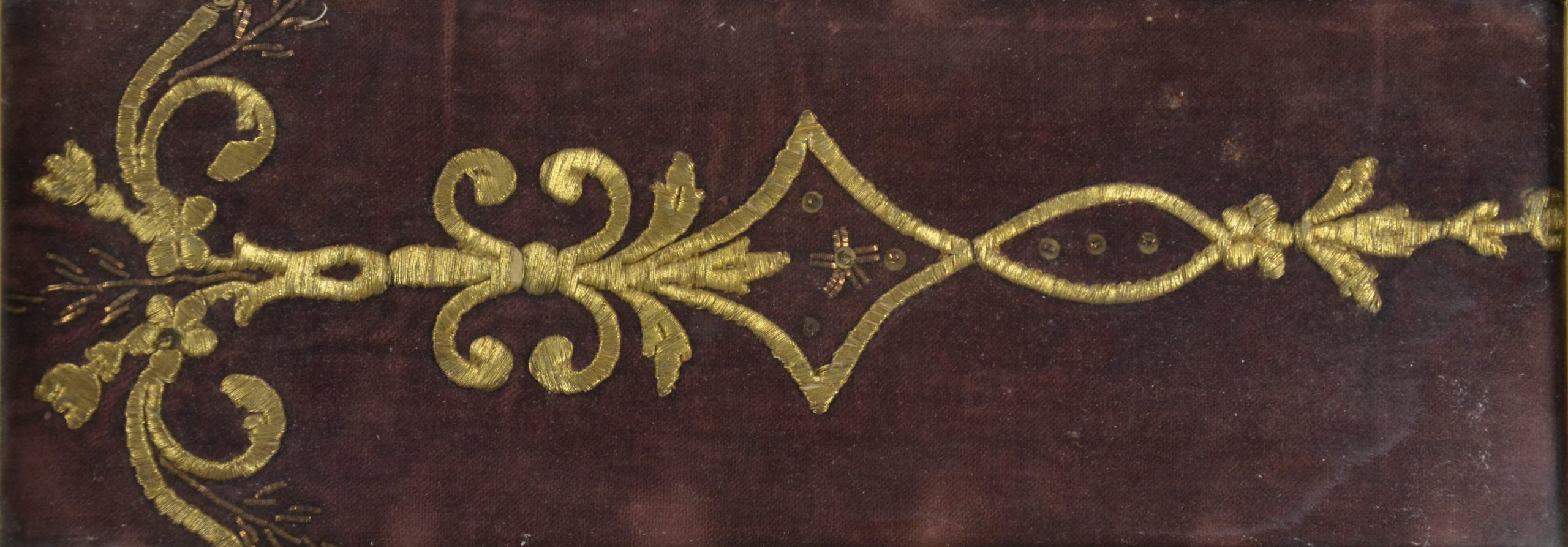
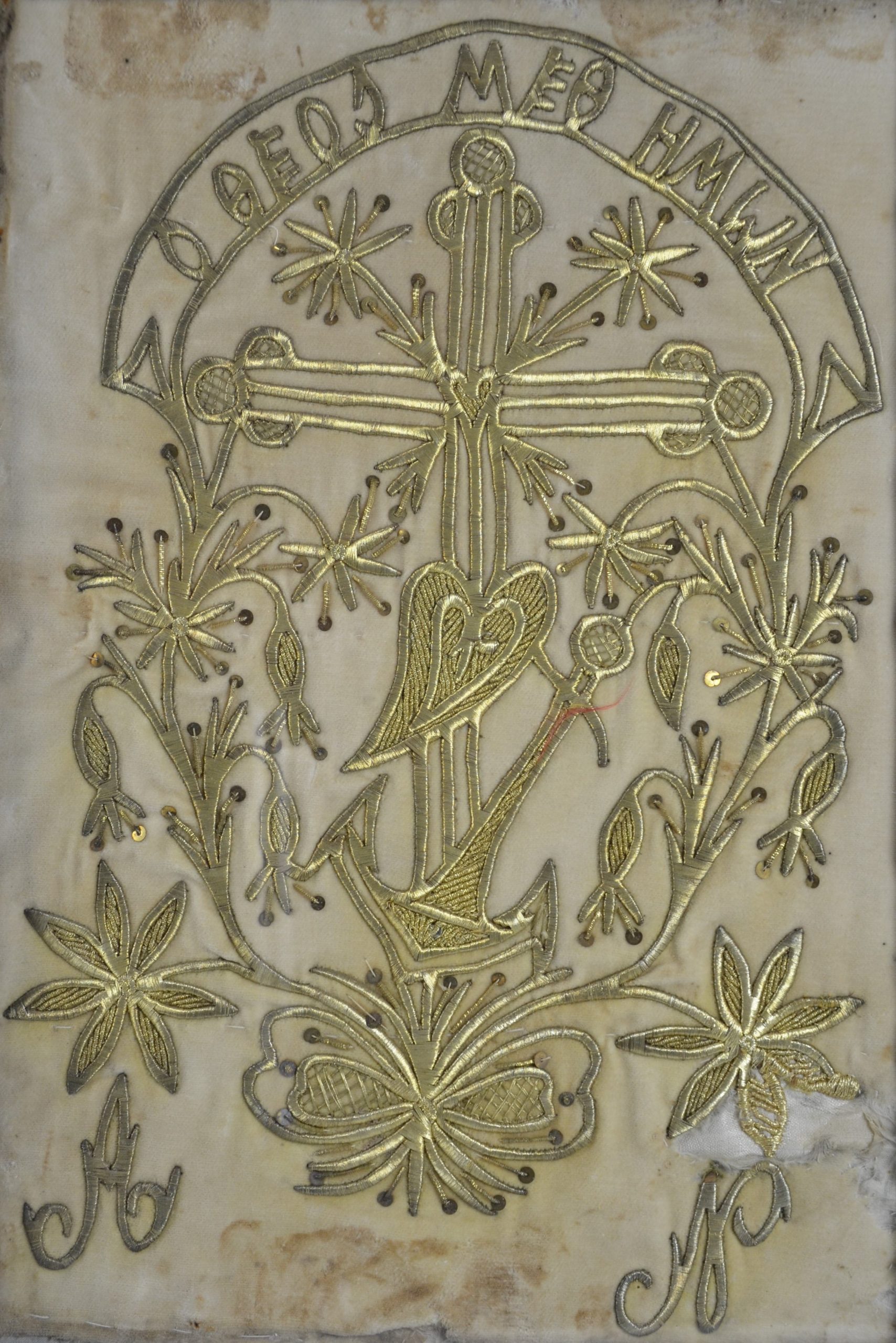
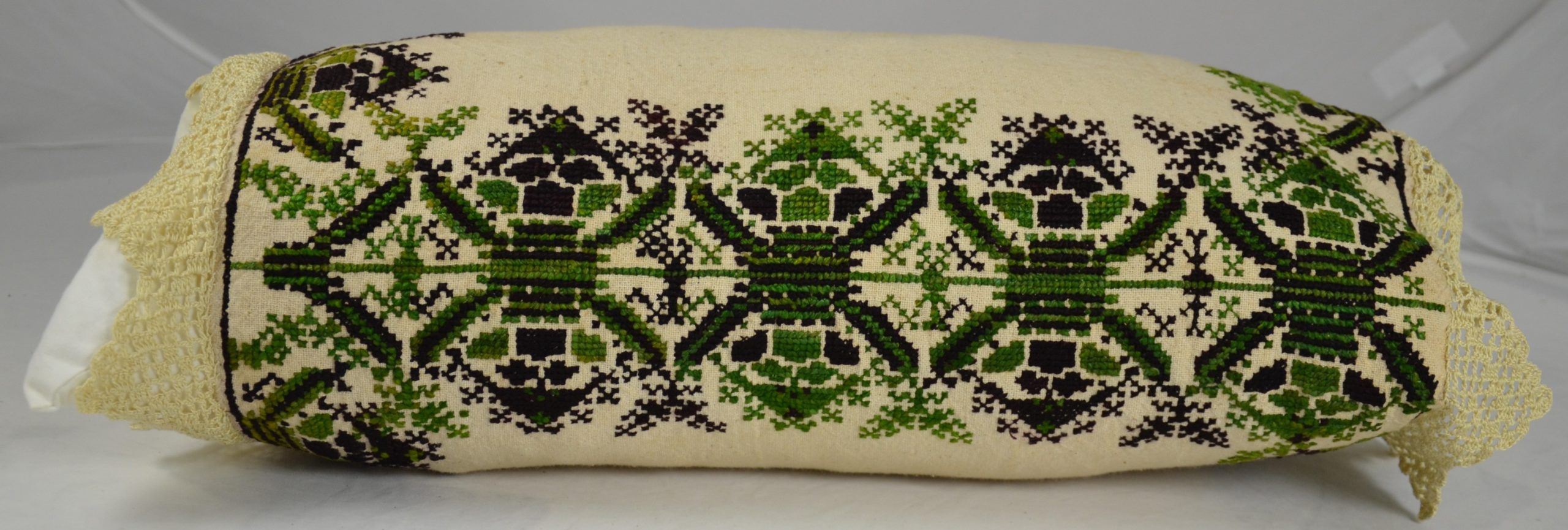
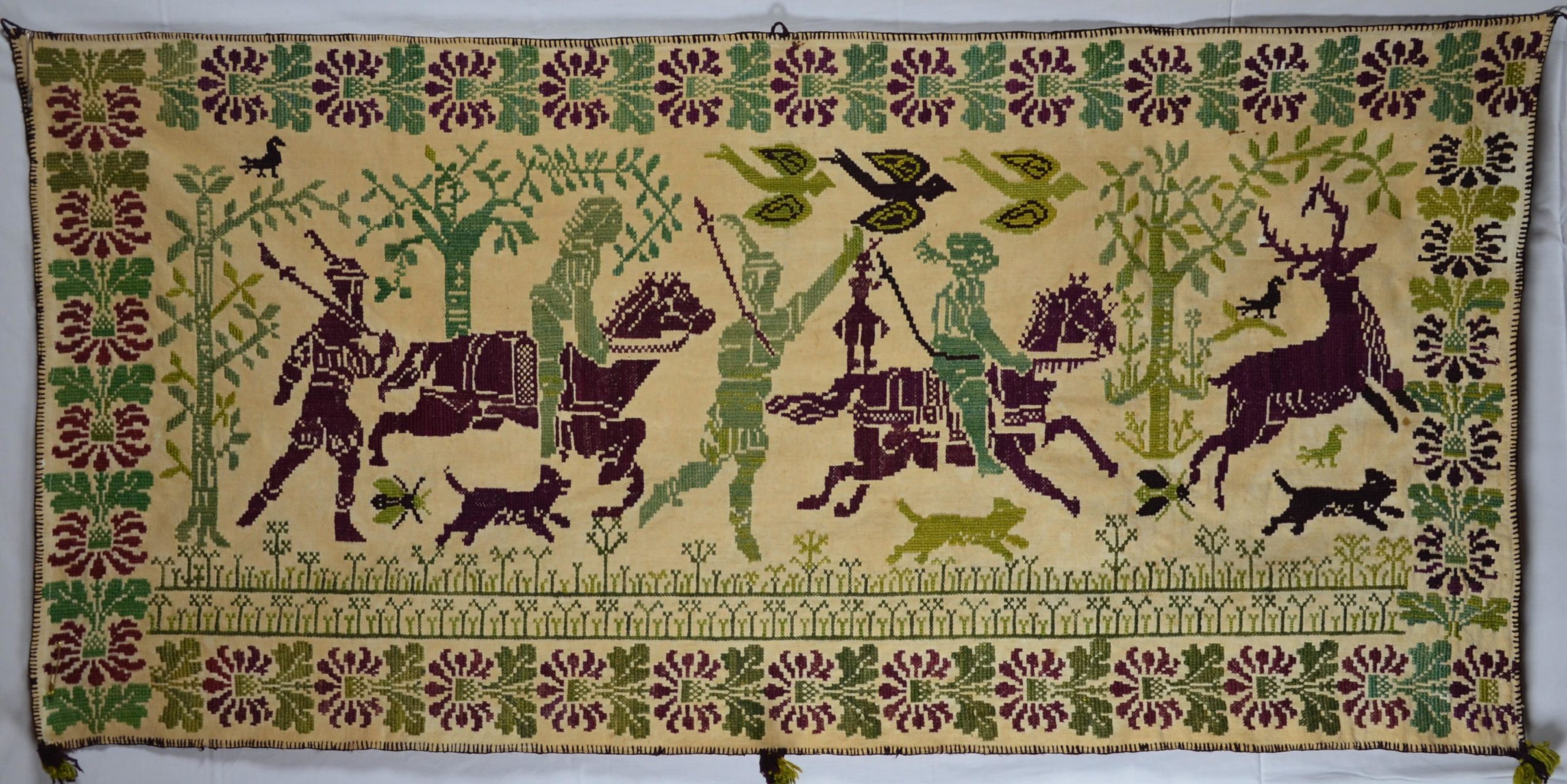
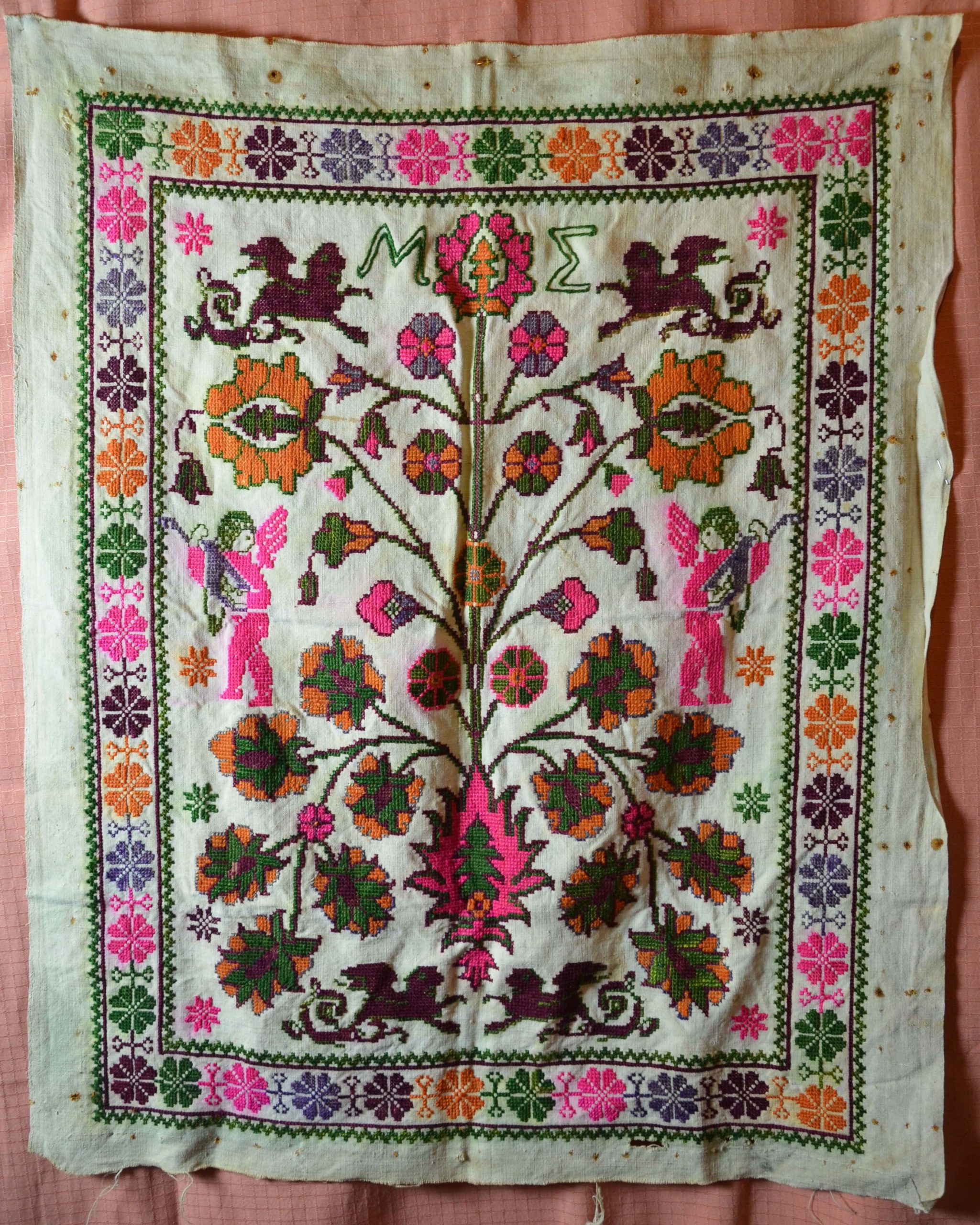
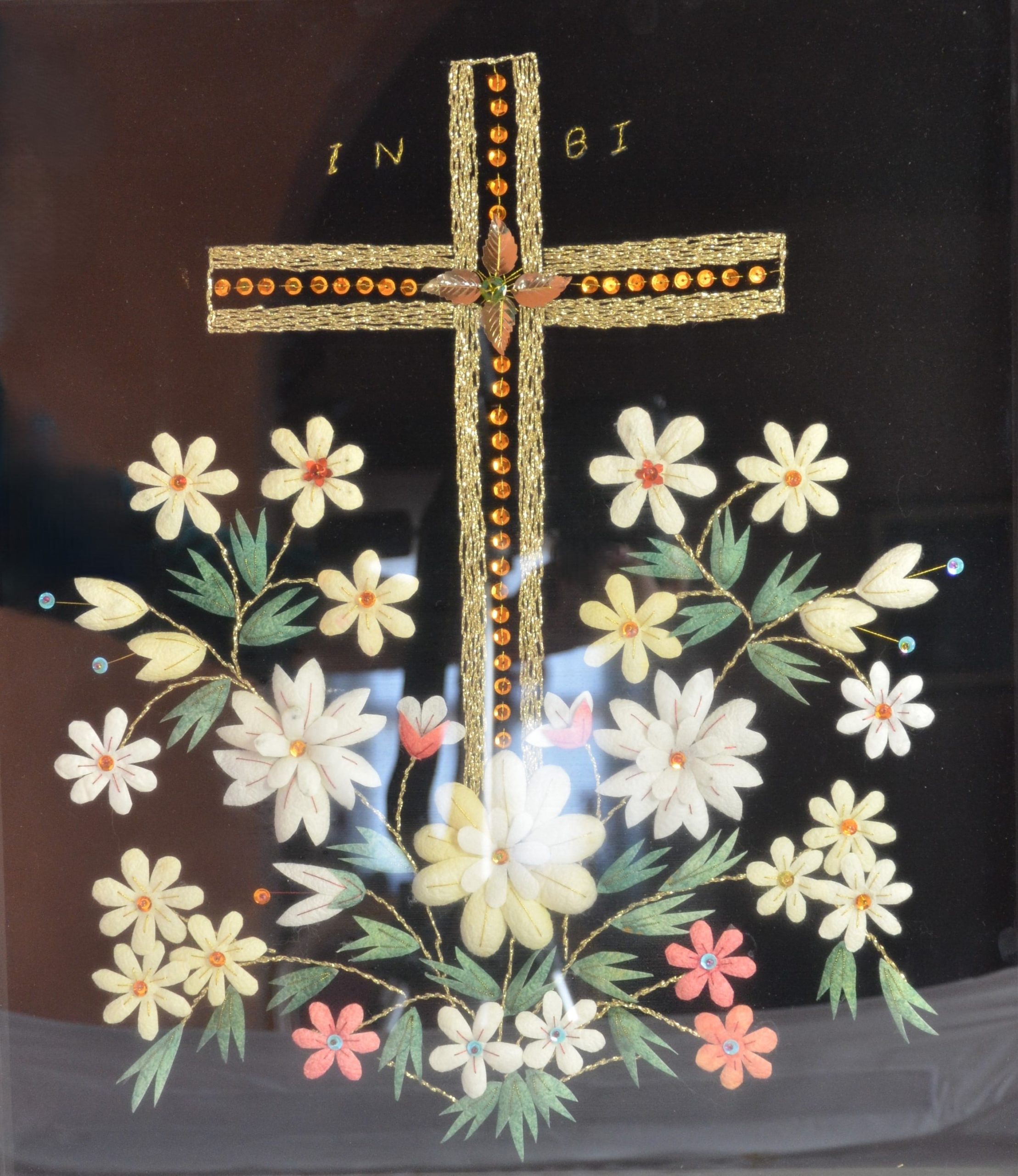
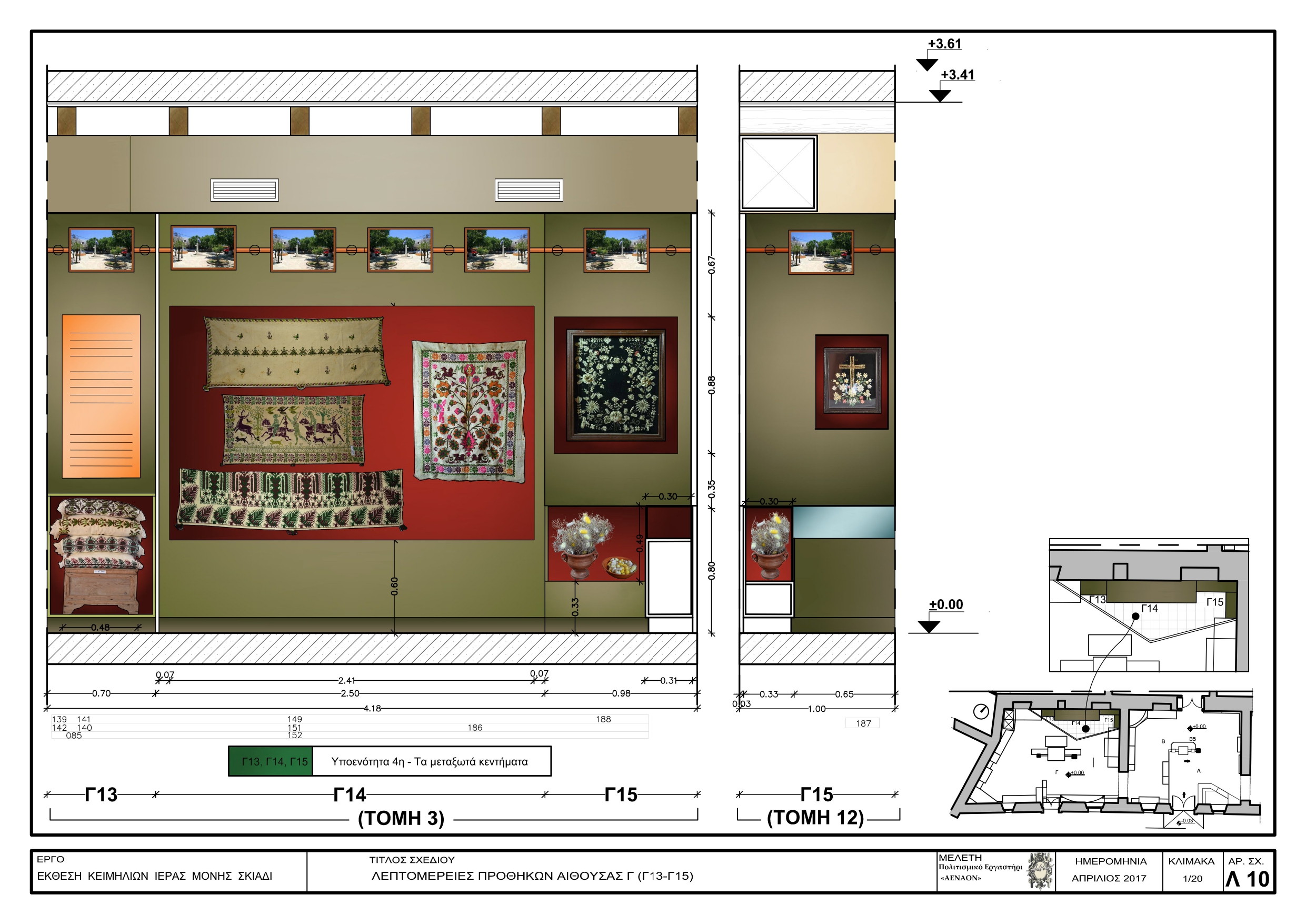
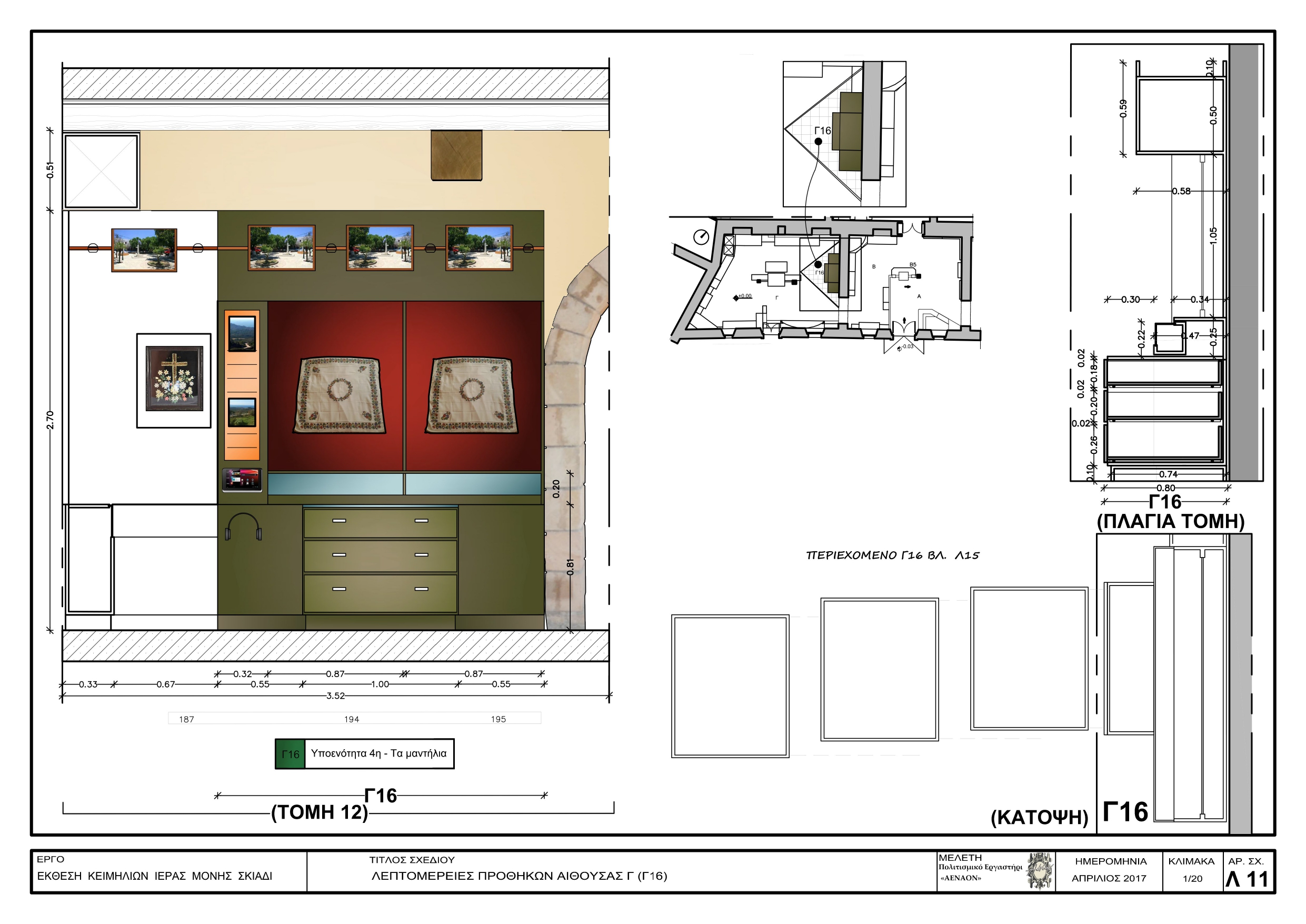
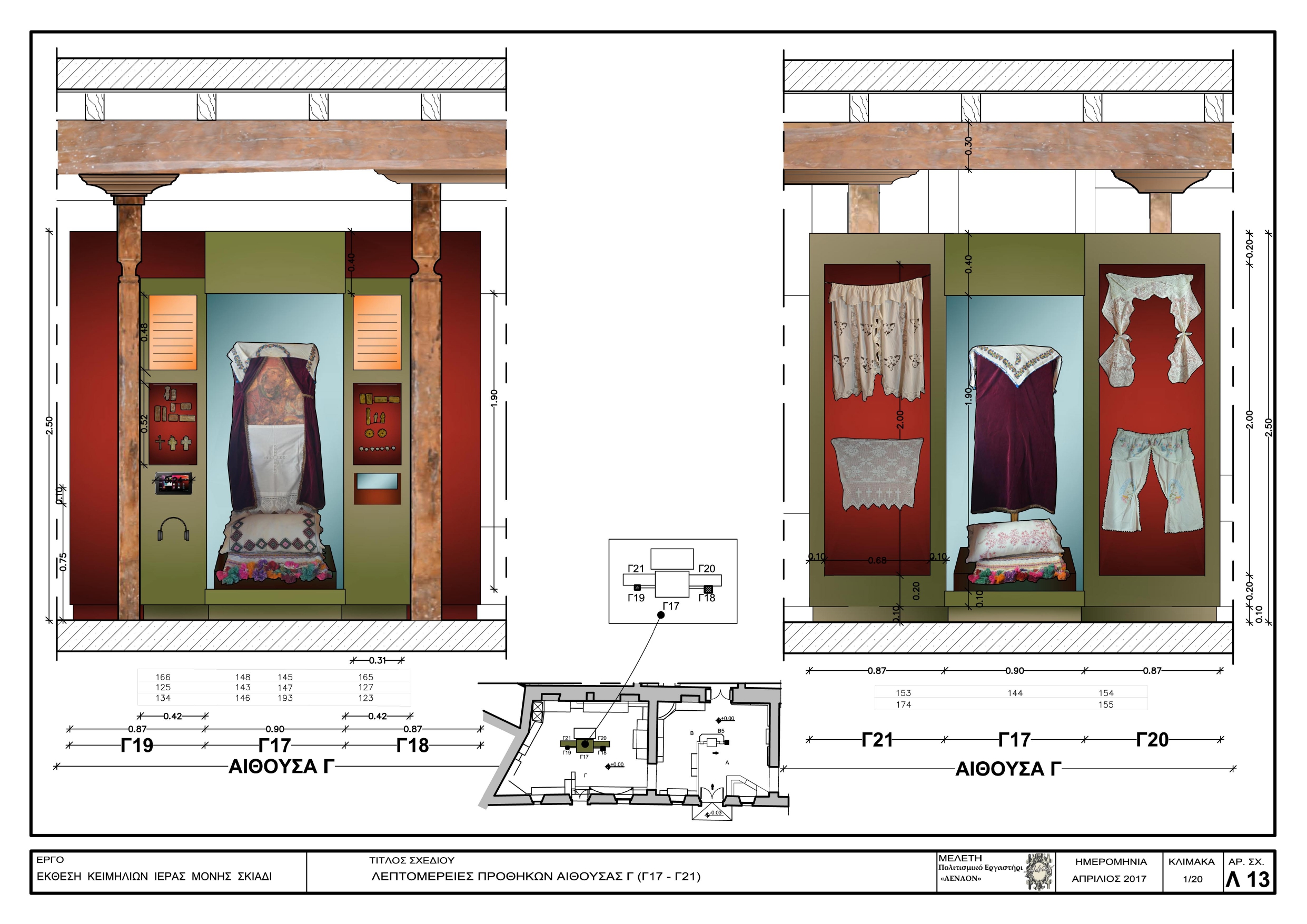
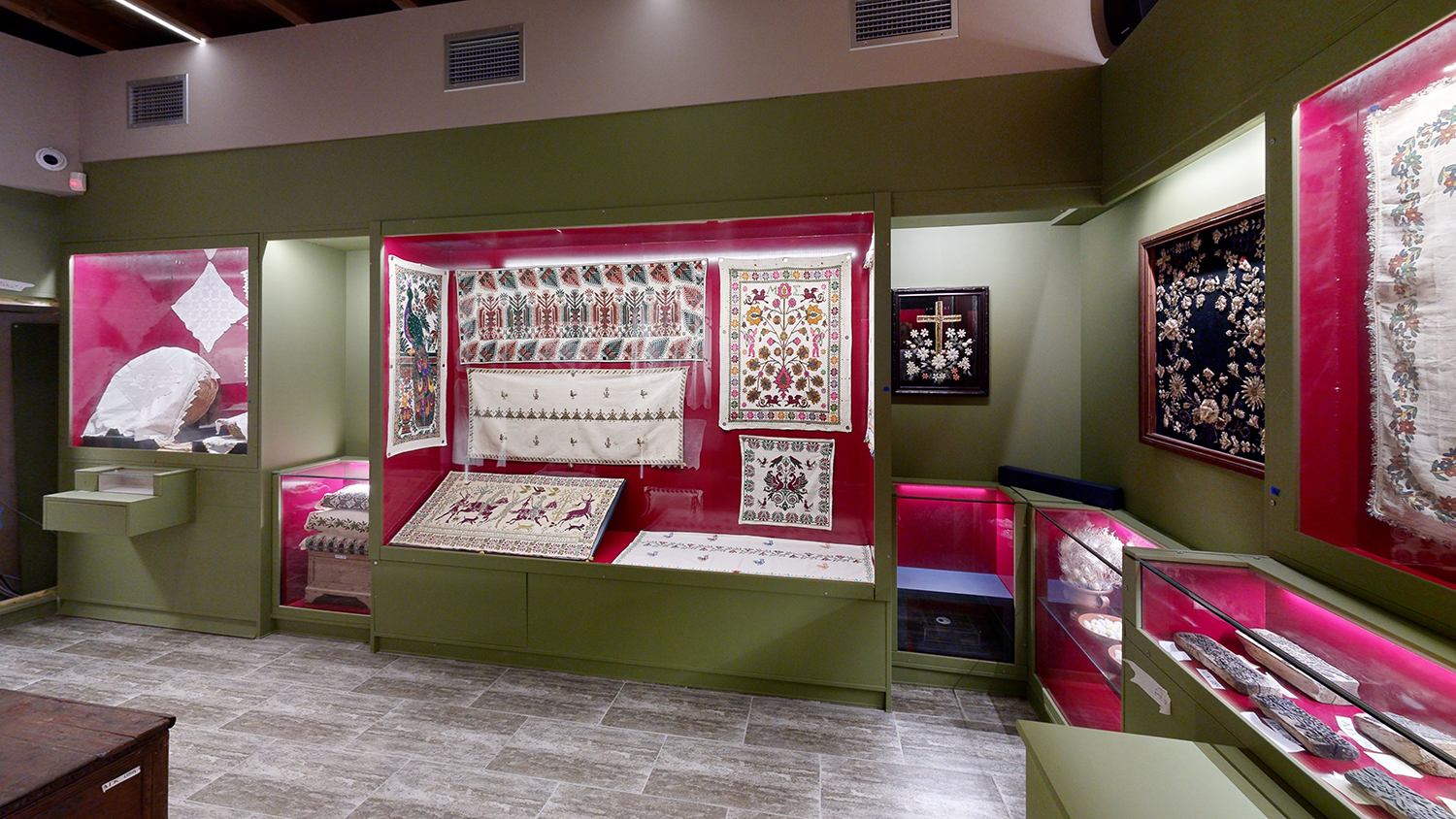
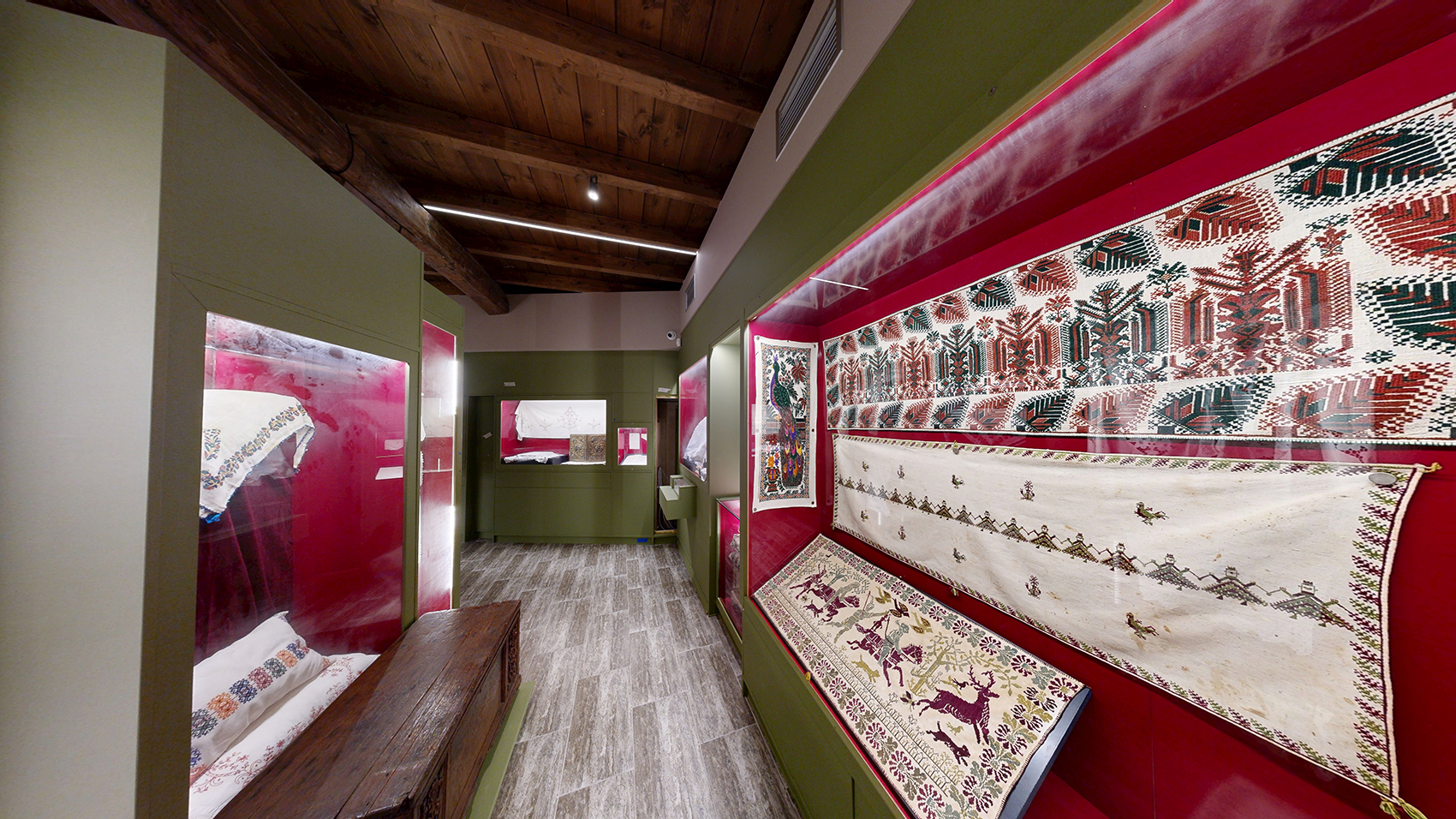
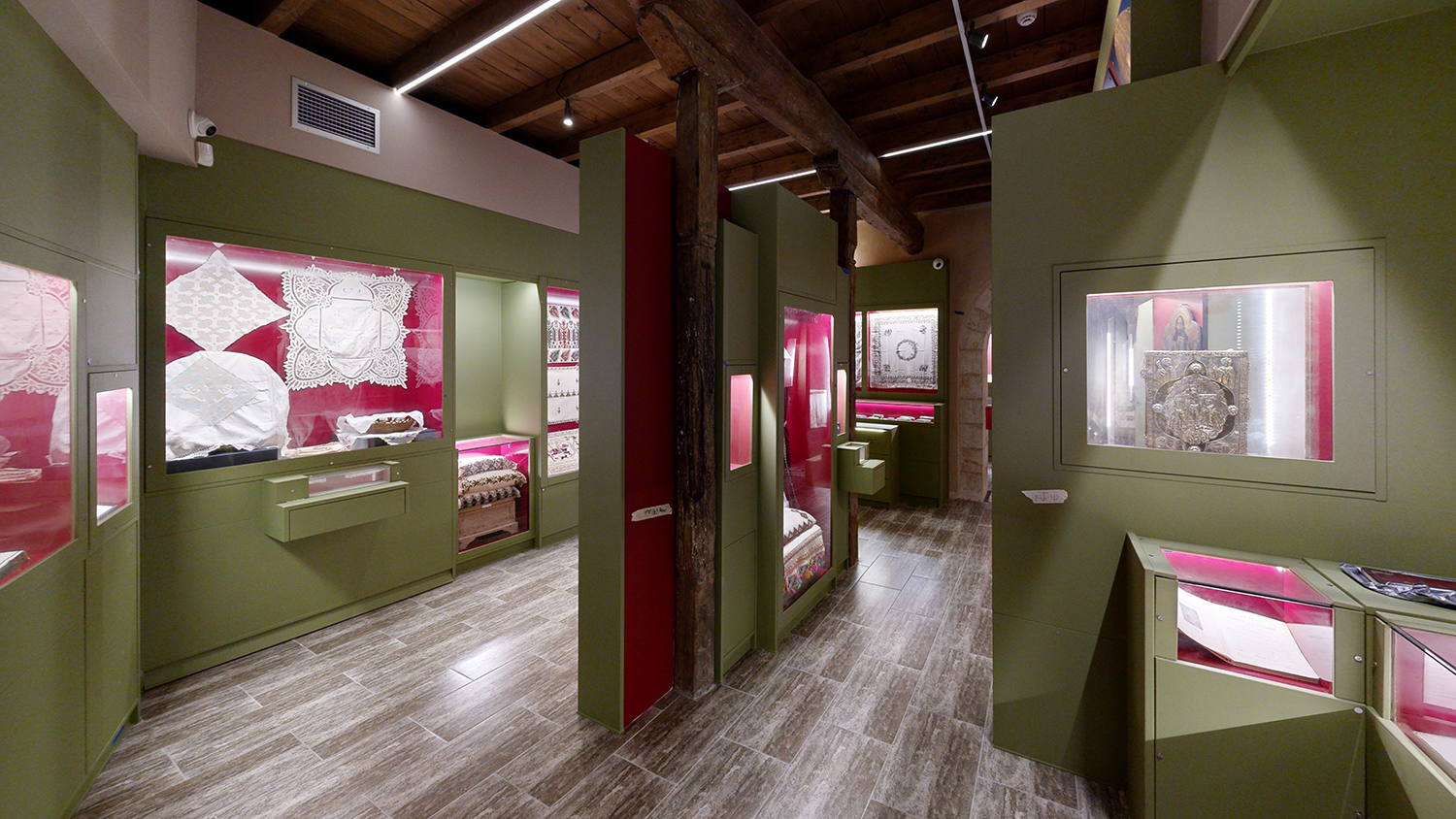
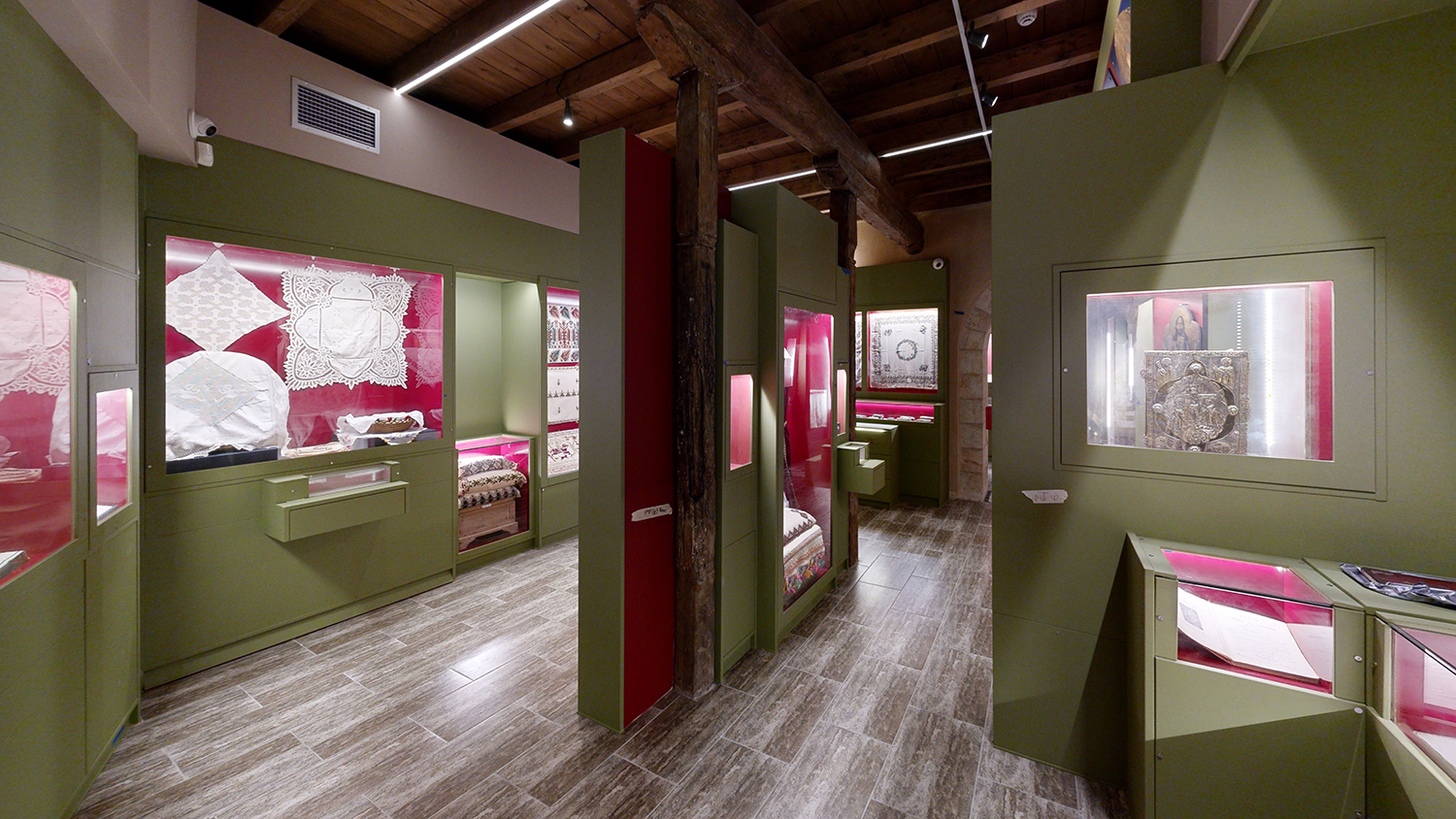
The last subsection deals with the “dowries” of the Virgin Mary. The monastery possesses a large collection of textile objects of folk art, especially silk, covering a period from the beginning of the 20th century to the present day. The annual rate of enrichment of the collection is noteworthy, and it is directly related to the procession of the icon of Panagia Skiadeni in the villages of southern Rhodes and Chalki. The housewives offer the icon a lot of their handiwork, such as embroidered fabrics, headscarves, blankets and tablecloths. In this way, they “endow” the Virgin Mary with objects that serve the liturgical or utilitarian needs of the monastery. By offering their works for which they have dedicated time and effort, they also express a request to the Virgin Mary for divine protection.
This subsection also presents the “patikiasma” of the icon of the Virgin Mary. Every year, during its Easter procession, the icon of Panagia Skiadeni is carried from village to village in southern Rhodes on foot by the faithful. It spends the night in each village for one or more days, where it is carried from house to house in procession, and the faithful participate in many paracletic services to the Mother of God. However, a type of auction is also held, which determines which house will host the icon that night. The process is called "patikiasma" or "batikiasma".
In the houses where it is hosted, it is placed with respect on an embroidered pillow, decorated and covered with other embroidered fabrics that are part of a special ritual. The icon returns to the Skiadi monastery on the Monday following the feast of Saint Thomas. The icon of the Virgin Mary is transferred to Chalki at the beginning of Lent and remains there for about twenty days.
A similar auction of the icon is also carried out on the feast day of the Virgin Mary on September 8. At the end of the divine liturgy, a procession of the icon of the Virgin Mary “Panagia Skiadeni” takes place in the churchyard. After the artoklasia, the icon is placed on a tree in the churchyard and everyone has the opportunity not only to venerate it, but also to hold it for a while. Then an “auction” takes place (called “tirtisma” or “batikiasma”) and the highest bidder acquires the right to lift the icon and “enthrone” it in its place in the katholikon of the monastery.